
Thirty years, one valley
Boom runs every second year on the shore of a reservoir in the Beira Baixa. Where it started, how it came to own its ground, and what that shore is.
Where and when
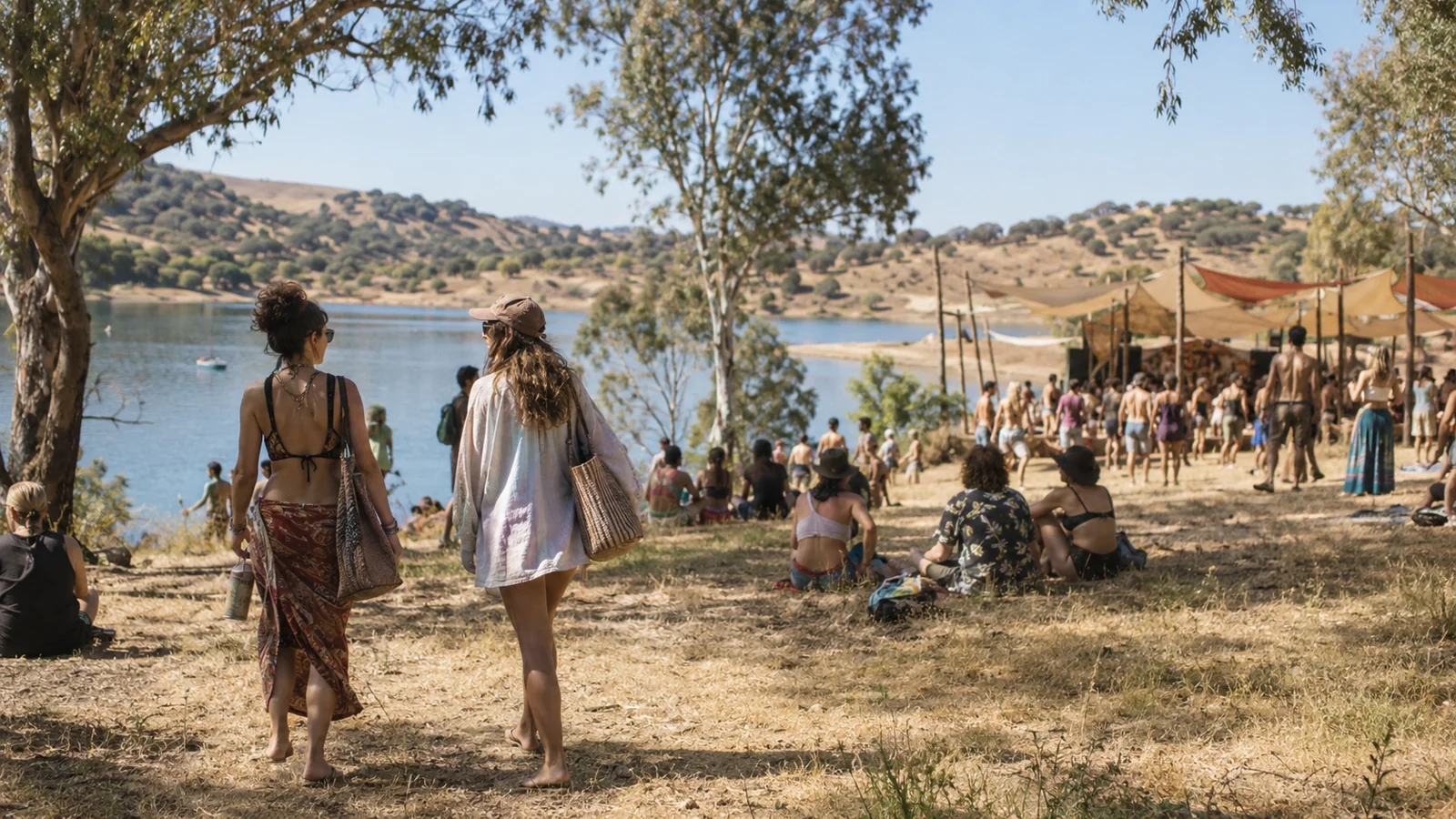
Boom Festival 2027 runs from 18 to 25 July at Boomland, the Herdade da Granja estate in the municipality of Idanha-a-Nova, Castelo Branco district, central Portugal. The festival is marking its thirtieth anniversary: the first Boom was held in 1997.
Three addresses in thirty years
The first Boom took place in August 1997 at Herdade do Zambujal, in Águas de Moura, and the festival stayed in that forest until 2000. It then moved inland to the shore of the Idanha-a-Nova lake, in 2002 according to the encyclopaedic record, and in 2010 it crossed to the other side of the same lake, onto the estate it uses today. Boom's own pages date its move to Idanha-a-Nova to 2010 and count their tree planting from then. A municipality and a particular estate are not the same address, which is probably why the two dates differ.
The move that changed the most came later. After a crowdfunding campaign, the organisers bought the estate on 28 September 2016. It is now managed by IdanhaCulta, a non-profit association. Owning the ground is what makes long projects possible: a wastewater plant, hundreds of composting toilets and fifteen years of tree planting are not investments anyone makes on a field they have to hand back.
The lake
The water at Boomland is the reservoir of the Marechal Carmona Dam on the river Ponsul, also called the Idanha dam. It began to fill in 1946 and changed the whole valley: it separated the two Idanhas, Nova and Velha, which had faced each other across it. In summer its river beaches are used for swimming and water sports.
What is nearby
Boom's own guide places Idanha-a-Velha, a village founded by the Romans and later held by Visigoths, Moors and the Knights Templar, a couple of kilometres from Boomland. Idanha-a-Nova, the nearest town, is where the ATMs, shops and supermarket are. Monsanto, a village built among giant granite boulders 758 metres up, is about 18 km away, and Penha Garcia, known for its trilobite fossils, about 30 km.
How it pays for itself
Boom describes itself as wholly independent and free from corporate sponsorship. It is financed by tickets, bars, accommodation services and the rental of space to shops, restaurants and cafes, and those funds also repay the loan taken to buy Boomland. It says it has been selling out since 2014, and that tickets for 2027 are again limited.
See Boom 2027 packages